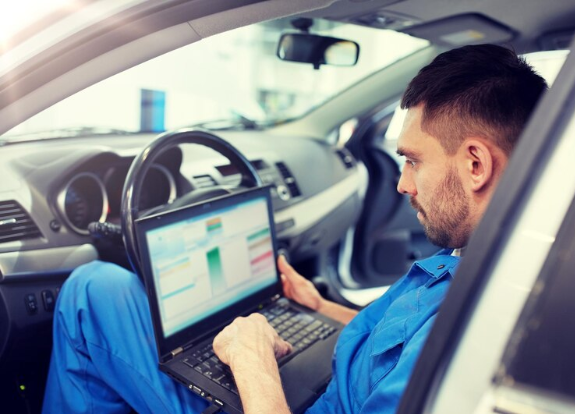
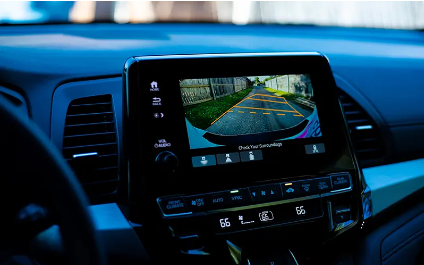
Manufacturers equip all new cars with advanced Driver Assistance Systems (ADAS). These advanced safety systems use sensors to collect information about the vehicle’s surroundings. Sensors gather data to provide safety warnings. ADAS can use sensor data to temporarily control a vehicle’s braking and steering. All in the interest of driver safety. As with any sensor, the accuracy of ADAS sensors is only as good as their calibration. ADAS calibration is a growing need in the auto industry.
This article will provide a detailed overview of ADAS calibration and four examples of sensors that require it.
What is ADAS Calibration?
Before we can understand what calibration is, let’s first answer the question ” What is ADAS ? “. ADAS is an Advanced Driver Assistance System. Sensors and systems make up these auto safety features, enhancing driver safety.
You must precisely recalibrate ADAS systems when you repair a damaged vehicle to return them to their pre-accident state. Additionally, this ensures that all safety features function correctly and reliably. Furthermore, proper recalibration helps maintain the vehicle’s overall performance and safety standards. The ADAS calibration ensures that all systems perform as intended and maintain optimal safety standards.
ADAS calibration is the physical alignment, testing, and electronic aiming (and recalibration) of sensors to collect data for your vehicle’s advanced driving assistance systems (ADAS), such as forward crash warning (FCW), lane depart warning (LDW), and automatic safety braking (AEB). Consequently, this process ensures that all sensors function accurately and reliably, enhancing overall vehicle safety.
The calibration tells the sensors where to look. The calibration also shows sensor the position of the sensors in relation to the vehicle. Most ADAS sensors require precise aiming. AAA explains that “a car sensor out of alignment will aim at an area 50 feet or more down the road.
In a new vehicle, professionals set up ADAS sensor positions in the factory standard position. All sensors are pointing in the same direction. Throughout the life of a vehicle, many things can cause sensors to become out of alignment. These include collisions, minor fender benders, and repairs near other parts or components. After a windshield replacement, vehicles that have a forward-mounted ADAS camera on the windshield will need calibration.
Unfortunately, not all ADAS sensors have the ability to self-diagnose and alert drivers when they need calibration. Therefore, it is crucial to schedule regular check-ups to ensure the system functions correctly. To ensure that ADAS systems work properly, automotive professionals must know and adhere to OEM standards for ADAS calibration.
Types of ADAS calibration
ADAS-equipped cars may need static calibration or dynamic calibration depending on their specific ADAS system requirements and OEM recommendations. Each of these ADAS calibrating techniques requires different tools, equipment, and conditions.
Calibration Static ADAS
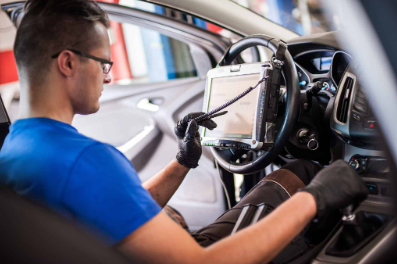
Most vehicles begin with static calibration. Technicians perform static ADAS calibration in a controlled setting while the vehicle is still. ADAS static calibrating uses special tools and a specially rendered setting to set the sensor angles. For proper static calibration, technicians need:
- A minimum of 30′ x50′ is required.
- The finished floor
- Color neutral and uniform on the walls and floors
- Lighting that is uniform and adjustable
- Unobstructed space surrounding the vehicle
- No reflective surfaces
- No reflections on the windshield
- No direct sunlight
Static ADAS calibration equipment
To perform static ADAS calibrating, you will also need the following equipment:
- A scan tool for ADAS — Most OEMs need a scan tool to initiate and access electronic scanning and calibration processes.
- Alignment rack – While all static ADAS calibrating requires a flat and level surface, certain OEMs go beyond, requiring that an alignment rack be used.
- ADAS calibration tools — requirements vary from OEM to OEM. However, they are all designed to hold up targets at a calculated and measured distance away from the vehicle. They can also stay in place.
- Aiming Targets — Some vehicles only use one target while others use several targets. Some targets are enlarged black-and-white patterns. Radar aiming targets may be metal pyramids, reflective metal plates, or electronic Doppler boxes.
- It is essential to have measuring tapes or laser devices. The ADAS tool is used to take precise measurements of the targets and much more.
Some static calibration procedures will require manual adjustments depending on the vehicle’s make, model, and age. The final adjustments are made during calibration by the ADAS module.
Dynamic ADAS calibration
Some vehicles only require a dynamic calibration. Static calibration is required for some vehicles, while dynamic calibration is the last step of the ADAS calibrating process for others. Dynamic calibration is a manufacturer procedure that involves driving the vehicle at specific speeds and conditions while it is connected to an ADAS scan tool, so the system can finish setting itself to factory spec. It’s not a typical test drive. The dynamic calibration process is defined by each OEM, and there are specific parameters that must be met — clearly marked roads, following a lead vehicle, avoiding curves, and holding a set speed are common examples.
Note: When the manufacturer’s procedure calls for a dynamic step, that driving is part of the calibration method itself — not a way of road-testing the result. Service Pros Auto Glass confirms the finished calibration on the OEM-trusted tablet the dealer uses, so the readings — not a hunch from a drive — tell us your safety systems are aimed to spec.
4 examples of ADAS sensors that can be calibrated
Modern vehicles come with a wide range of ADAS sensors. However, not all of these sensors need to be calibrated. Here are some of the most common ADAS sensors that need to be calibrated.
Steering Angle Sensors
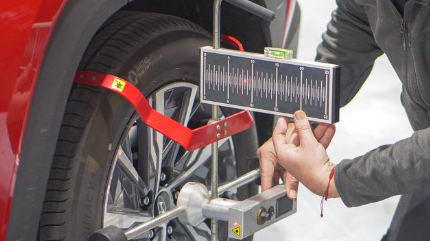
Steering Angle Sensors are self-explanatory. They indicate the direction in which the steering wheel has been turned. To get an accurate zero point calibration, you must set your steering angle sensors. Some systems are self-calibrating, while others require recalibration with a scanner tool. Others require additional procedures. The typical calibration procedure includes setting the wheels forward and using the scan tool to zero the steering angle.
ADAS systems using input from steering angle sensor:
- Adaptive headlights (Curve-adaptive headlights)
- Blind spot detection
- Lane Departure Warning (LDW)
- Lane keeping assist (LKA)
ADAS calibration of steering angle sensors usually occurs after:
- Wheel alignment
- Repair of steering/suspension
- Structural repair
- Airbag deployment
Front Facing Camera Sensors
Front-facing ADAS cameras are usually mounted on the inside of the windshield near the rearview. They detect cars, pedestrians, and other obstructions that may be in the vehicle’s view. Subaru uses two cameras for better depth perception. Most OEMs only use one camera. The sensors on the front-facing cameras can be used to measure distances from forward objects, watch and detect lane markings, recognize traffic signs, and even sense light levels.
ADAS systems that use front-facing camera sensors often include:
- Adaptive cruise control (ACC)
- Automatic emergency braking (AEB)
- Automatic high beams
- Lane Departure Warning (LDW)
- Lane-keeping assist
ADAS calibration of front-facing cameras is required after:
- Airbag deployment
- Windshield Replacement
- Vehicle Alignment
- Change of suspension
- Many collision repair works, particularly those that involve more than cosmetic panel distortion
Forward Radar Sensors
You can find radar sensors for forward motion in the front bumper of a vehicle. These sensors control the distance between the vehicle and the object in front. Some vehicles use a radar system in front, while others use cameras. Others use both.
Static, dynamic, or both calibrations are possible for forward radar sensors. Static calibration involves aiming at metal targets, such as metal pyramids or metal reflector sheets. Additionally, this also means that the shop must be free of any other reflective surfaces. Consequently, ensuring an optimal environment is crucial for accurate calibration results.
ADAS systems often use data from forward radar sensors:
- Adaptive cruise control (ACC)
- Automatic emergency braking (AEB)
- Forward Collision Warning (FCW)
After certain situations, the calibration of the forward ADAS radar is required:
- Remove the front bumper or grille
- Front End structural Repairs
Rear Radar Sensors
Rear sensors are also located in the vehicle’s corners behind bumper covers. Additionally, these sensors play a crucial role in enhancing safety by detecting obstacles and assisting with parking maneuvers. They require calibration. These sensors can monitor distances to objects approaching from the rear or sides of the vehicle.
You can calibrate rear ADAS sensors, like forward radars, in a static or dynamic manner. There are several different calibration procedures depending on the OEM model and model year. All require a software tool and measuring devices. For static calibration, you may need a laser tool, corner reflector, or calibration mat.
ADAS systems using rear radar sensors
- Blind Spot Warning (BSW)
- Rear cross traffic alert (RCTA)
- Rear automatic emergency braking (Rear AEB)
When do rear radar sensors require calibration?
- Replace the sensor or sensor bracket
- Damage to mounting locations
- Remove or replace the rear bumper
- Repairs to the structural body at the rear end of the vehicle
ADAS Calibration the Easy Way — in One Visit
ADAS calibration is precise, detailed work, and getting it right is what keeps your safety systems doing their job. Here’s the part most drivers don’t realize: it doesn’t have to mean a second trip. At Service Pros Auto Glass, we replace your windshield and calibrate your ADAS in the same visit. We verify and validate the calibration with the same OEM-trusted tablet technology your dealer uses, so your camera and sensors come back aimed to factory spec before we hand you the keys.
Cracked windshield with a camera behind it? Call us before you call insurance. We’re local and employee-owned — no private equity, no out-of-state call center — and we come to you at home, work, or a nearby spot. We assist with your claim and bill your insurance directly, and in Florida and South Carolina, with comprehensive coverage, it can be no cost. No comprehensive coverage? We’ll give you a straight cash quote from your VIN and year, make, and model. With 900+ reviews at 4.9★, drivers trust us to get it right the first time.
Run a dealership or fleet and need same-visit ADAS done right? See our dealers and fleets program. Schedule your damage assessment today, or call now and we’ll take it from there.